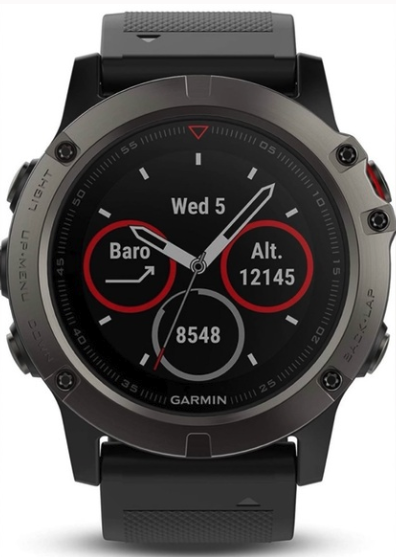

My “do everything” adventure watch that’s built to take a beating.
I’m not someone to jump on the latest technology. I am someone who likes to track my fitness as a way to motivate and track my progress toward overall health and fitness goals. So, several years ago I talked myself into buying a fitness-oriented watch as a way to keep myself accountable to my goals. And I took the recommendation of a triathlete friend who recommended the Garmin Fenix series of watches.
That was almost 7 years ago. And ever since the watch has been on my wrist for travel, outdoor runs, treadmill workouts, outdoor walks, indoor cycling, road biking, mountain biking, open water swims, lap swimming, triathlons, road races, downhill skiing, weight training and so much more. It’s also survived countless hits against my desk, falls off my bike, hitting door jambs, being dropped on tile flooring and even one big hit against a metal door. It really does take a beating and keeps on tracking my movements and overall fitness efforts.
So, why the Fenix series of watch? It’s built to take a beating and make tracking simple. It’s built-in wifi connectivity means that it syncs with the Garmin app on my iPhone several times a day. It helps me to stay accountable to my daily step goals and track necessary recovery times.
The Fenix 5 was/is built to be rugged and reliable. The sapphire crystal lens protects from everyday and extreme scratch potential. Even after years of use and abuse the lens on my watch is as clear as the day I first put it on my wrist. It’s water rated to 100 meters, so I don’t think twice when I shower swim, jump in the ocean, etc. And, living in the Northeast, I also don’t sweat big swings in temperature. It’s on my wrist when I’m shoveling out of a snowstorm and when I’m working out in extreme summer heat.
What do I rely on my Garmin Fenix 5 to track? Let’s just say it’s my diary of all things movement.
- Running for fitness
- Walking for fitness
- Treadmill
- Hiking
- Road Cycling
- Indoor Cycling
- Pool Swimming
- Open Water Swimming,
- Downhill Skiing
- Sailing
- Strength Training
- Triathlons
It’s all tracked by selecting an activity, clicking and starting the tracker and then letting the watch do the rest. It’s all seamlessly transferred to the Garmin app for overall fitness tracking.
I also rely on my watch to connect to my heartrate tracking chest strap, to further up my tracking and recovery metrics. Once I put the strap on my chest for a workout, the heartrate is automatically captured and tracked by the watch. NOTE: The watch has a built in heartrate tracker but I find the chest strap more reliable when working out.
The watch also connects to my road bike pedals and road bike computer for even more in-depth tracking. Since they’re all Garmin products, it’s seamlessly easy to integrate and use and enjoy all of the products together.
The watch also has a navigation function that makes it easy to find my way around new running routes, biking in new cities, etc.
I’ve also setup the watch face to display the metrics that matter most to me. I can see my daily step progress, calorie burn rate and recovery times all on my “home” watch face. Other metrics are readily available at the click of a button.
My next investment is likely to add a foot pod, so that I can also track indoor treadmill pace and distance with consistency.
The built in sensors also help me in several ways
- Heart rate sensor tracks optimal heart rate and gives me insights into daily cardio load, calorie burn and stress levels. They help bring unseen metrics to light.
- Barometric Altimeter tracks elevation changes on my hikes, runs and biking. This ties into heart rate and other metrics to create an overall fitness evaluation and recovery time recommendations.
- Compass is useful when I am trying to find my way back to a trail or find my way back to the predefined biking route when I get lost.
- Step counter tracks my steps and displays daily progress so I’m always accountable to my daily step goal
- Sleep monitoring tracks my sleep patterns and helps me understand how well I am recovering each night. And, conversely, how poorly I’m sleeping sometimes.
- Stress tracking shows me when I might need a break, even when I try to tell myself “I’m fine”. The watch doesn’t lie. 🙂
The watch also syncs all data to the Garmin Connect app. This gives me a comprehensive dashboard for insights, trends and motivation. I like to look at the data to:
- Compare workouts week over week
- Analyze heart rate zones and training load
- Join challenges with friends for accountability
- Set accountability goals for my own motivation.
Connecting through Wi-Fi or Bluetooth means my data flows seamlessly from watch → phone → Garmin Connect, making it easy and almost instant for my data to show my progress. Or lack thereof.
If I had to summarize why I love my Garmin fēnix 5 Sapphire , I’d have to say that it tells a bigger story than “how fast” or “how far.” It tells mehow consistently I’m training, how well my body is responding, and whether I am trending toward my goals — whether those goals are:
- A specific fitness goal, like a 20 mile ride in at a specific pace
- Improving overall cardio fitness over time
- Training for a triathlon
- Doing a trialthlon
- Maintaining consistency long-term
- Balancing activity with recovery
At some point I’ll have to buy a new watch. Based on the experience I’ve had with the Garmin Fenix 5 Sapphire, it won’t have a decision to make. I’ll buy the newest version in the Fenix Sapphire series.
This watch motivates me to step outside every day, not just at the gym, because every move counts — and the watch knows it. The watch is more than a watch. It’s motivation that I can rely upon, even when it takes a beating.